Why Radon Levels Change Between Floors: The Science of Soil Gas Concentration
Homeowners in the Salt Lake City metro area often discover a confusing discrepancy: a basement test shows elevated levels while the kitchen or upstairs bedrooms test significantly lower. This variance is not a fluke of the equipment but a predictable result of how soil gas interacts with the physics of a building. Radon is roughly eight times heavier than air, which naturally leads to higher concentrations in sub-grade spaces where the gas enters through foundation cracks and sump pits.
Understanding the vertical distribution of radon is critical for prioritizing mitigation efforts and ensuring occupant safety. This guide breaks down the fluid dynamics of soil gas and explains why radon levels on different floors can fluctuate based on the season, home construction, and ventilation patterns.
Why Vertical Radon Distribution Varies
Radon does not distribute itself evenly throughout a home like humidity or scent. Its movement is governed by specific physical drivers that concentrate the gas at the entry point.
- The pressure difference created within the home and the surrounding soil can pull radon into the home through a vacuum-like effect according to the University of Nevada, Reno Extension.
- Radon is a naturally occurring gas caused by the decomposition of uranium-bearing granite in the soil, making the foundation the primary source of entry as noted by the Utah Department of Environmental Quality.
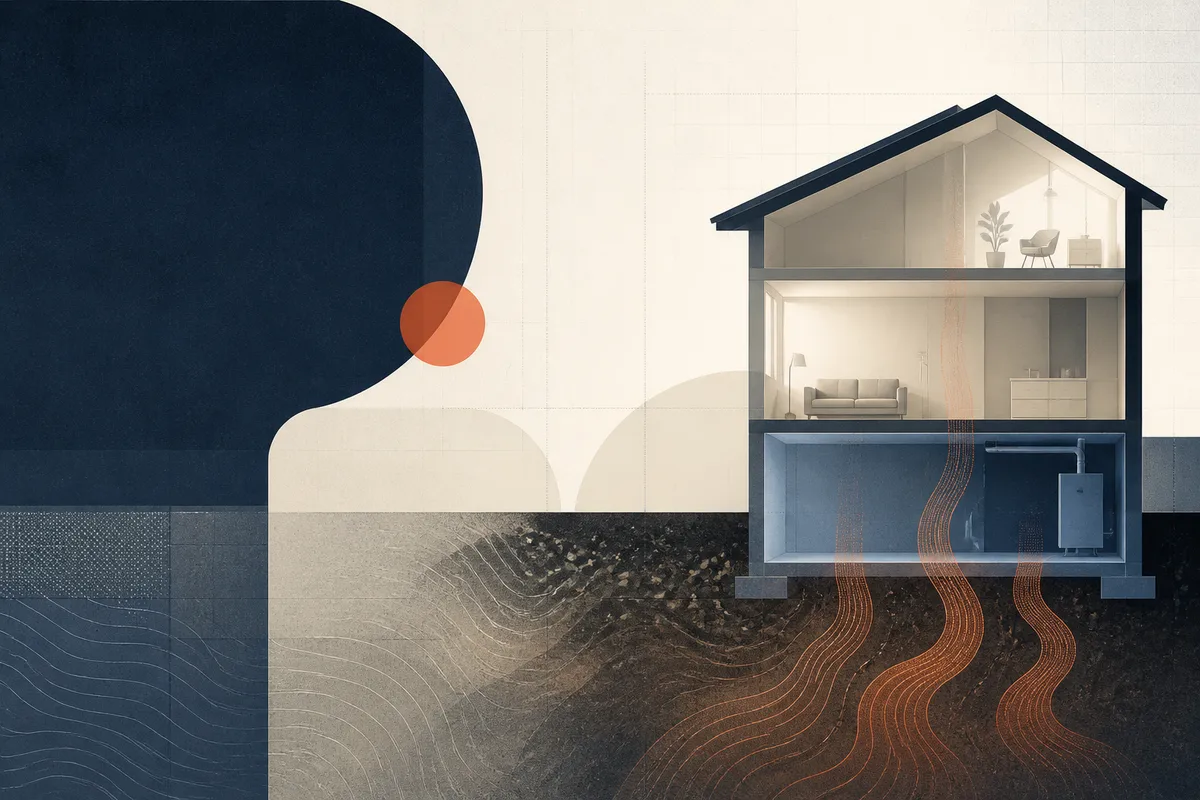
- The "stack effect" causes warm air to rise and escape through upper levels, creating a suction at the bottom of the house that draws in cool, radon-laden soil gas.
- Dilution occurs as the gas moves upward, mixing with fresh air from windows, doors, and mechanical ventilation systems on higher floors.
The Mechanics of Gas Migration
To accurately assess risk, one must understand how the building shell acts as a lung, breathing in soil gas at the base and exhaling it at the top.
1Identify the primary entry points
Radon enters through the path of least resistance, which includes floor-to-wall joints, gaps around service pipes, and porous cinder block walls. In the Salt Lake City Service Area, homes with daylight basements or walk-outs may see different pressure dynamics than those with completely subterranean foundations.
2Factor in the stack effect
During Utah winters, the temperature difference between the warm interior and cold exterior air intensifies the upward movement of air. This creates a stronger vacuum at the slab level, often leading to a seasonal spike in radon gas concentration in basements.
3Account for seasonal inversions
While the basement is usually the "hot zone," research has shown that trends can shift. A study published by the National Institutes of Health found higher radon values at the highest floor during the cold season in certain building types, with an inversion of the trend occurring from June to October.
4Evaluate HVAC influence
Forced-air heating and cooling systems can act as distribution networks. If a return air duct is located in a high-radon basement, the system may inadvertently transport the gas to the second floor, narrowing the gap between the readings on different levels.
The Role of Air Density and Soil Pressure
The primary reason for the concentration gradient is that radon originates from the earth, not the air. Because it is a heavy noble gas, it tends to settle in low-lying, unventilated areas. However, the house acts as a mechanical pump; every time a clothes dryer, fireplace, or bathroom fan exhausts air to the outside, the home must replace that air. If the easiest source of replacement air is the soil beneath the slab, radon levels will rise regardless of which floor you are on.
The measurement of the force exerted by the air inside a home versus the soil gas outside the foundation, which determines the rate of radon entry.
How Radon Services Salt Lake City helps
Addressing radon issues requires a systematic approach that starts with verified data. Homeowners should begin with radon testing in the lowest level of the home that is used regularly. If mitigation is required, a standard scope of work typically involves installing a sub-slab depressurization system to intercept gas before it enters the structure. For homes where levels remain a concern after initial work, radon retesting on multiple floors helps confirm that the pressure field extension is sufficient to protect all living spaces. Residents in Salt Lake City can reach out for professional guidance by calling (385) 541-6540 or visiting the online request page.
Frequently asked questions
Should I test the second floor if my basement test was low?
Generally, if the lowest level of the home is below the action level, the upper floors are also likely to be safe. However, if the home has a unique HVAC configuration or is built into a slope where upper levels have direct soil contact, testing the second floor provides necessary peace of mind.
Why are my second-floor radon levels higher than the basement?
This is uncommon but can happen due to the stack effect pulling gas through utility chases or plumbing stacks directly to upper floors. It can also occur during summer months if the basement is tightly sealed and air-conditioned while the upper floors are experiencing specific pressure changes.
Does the type of foundation change how radon moves between floors?
According to the University of Nevada, Reno Extension, the type of foundation does not matter when it comes to how pressure differences pull radon into a home. Whether you have a crawl space, a slab-on-grade, or a full basement, the gas will still follow the pressure vacuum.
Is radon testing on the second floor required for real estate transactions in Salt Lake City?
Most real estate tests follow industry standards which dictate testing the lowest livable level, such as a finished basement. While not usually required by law, buyers may request additional testing if the upper floors contain the primary sleeping quarters and the home has a history of elevated levels.
How often should I retest different floors after installing a mitigation system?
Standard practice suggests retesting every two years to ensure the system is maintaining safe levels. If you renovate your home or change your HVAC system, you should retest both the mitigated level and the upper floors to ensure the air pressure balance hasn't been disrupted.
What happens when you get in touch: you describe the situation, we ask the few questions that actually change the answer, and you get a clear scope and next step — no obligation.