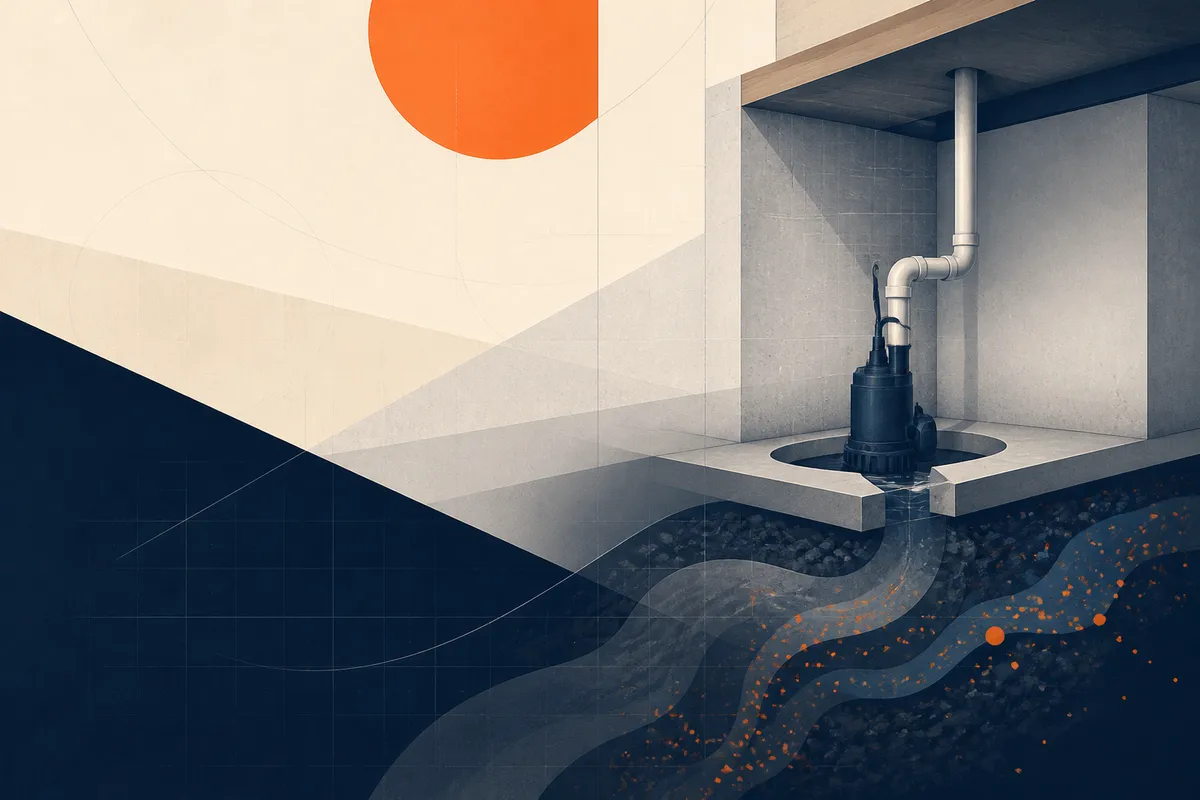
The Physics of Basement Air: Why a Sump Pump Won't Stop Radon
Basement moisture and radon gas are often treated as separate house maintenance issues, but they share a common delivery vehicle: the soil beneath your foundation. In the Salt Lake City metro area, many homes utilize sump pumps to manage high water tables, yet an open sump pit creates a path of least resistance for soil gases to enter the living space. If you have a high radon reading, a functional sump pump might actually be exacerbating the problem by providing a permanent, unsealed breach in your basement floor.
This guide breaks down the synergy between water management and soil gas mitigation. It explains why a "dry" basement can still have dangerously high gas levels and how to transform a sump pit from a liability into a component of a high-performing radon mitigation system.
Why moisture management fails to stop soil gas
A sump pump is designed to move liquid water, but radon is a gas driven by pressure. Even if your basement feels dry, the following factors allow gas to infiltrate:
- The "stack effect" in a home creates a vacuum that pulls air upward from the soil through any floor penetration.
- Open sump pits provide a massive surface area for soil gas to vent directly into the basement atmosphere.
- Sub-slab moisture vapor can carry dissolved radon, which then outgasses into the home as the humidity rises.
- Foundation drain tiles often lead directly into the sump pit, acting as a collection network for both water and gas.
The playbook for integrated soil gas and moisture control
Managing these two forces requires shifting from water removal to pressure management. This process ensures the area under the slab stays at a lower pressure than the air inside the home.
1Seal the sump pit with a gas-tight cover
A standard plastic lid is insufficient for gas mitigation. A professional installation involves a clear, gasket-sealed polycarbonate cover that allows for pump inspection without breaking the airtight seal. All penetrations for discharge pipes and power cords must be sealed with high-grade silicone or specialized grommets to prevent air leakage.
2Implement active soil depressurization
According to the Utah Department of Environmental Quality, active soil depressurization is the most effective method for radon reduction. This involves installing a dedicated vent pipe and fan that creates a permanent vacuum under the slab, pulling gas out before it can enter the sump pit or cracks in the floor.
3Utilize the sump pit as a suction point
In many homes, the sump pit is the ideal location for a radon suction point because it connects directly to the perimeter drain tile. By pulling air from the pit, the system can often depressurize the entire footprint of the foundation more effectively than a standard hole drilled through the concrete.
4Manage sub-slab moisture vapor
A radon system does more than move gas; it moves air. By constantly pulling air from beneath the floor, the system helps dry out the soil and gravel bed. This reduces the amount of moisture vapor that migrates through the concrete, which can prevent mold growth and protect finished basement flooring.
The mechanics of the sump-radon connection
When a radon fan is activated, it creates a zone of low pressure beneath the house. If the sump pit is left unsealed, the fan will simply pull conditioned air from inside the basement down into the pit and out the vent pipe. This is known as "short-circuiting." It wastes energy by exhausting heated or cooled air and prevents the system from actually pulling the radon gas out from under the far corners of the slab.
Sealing the pit forces the fan to draw air from the soil itself. This is why sump pit sealing for radon is considered a critical repair. A sealed pit also prevents the "musty basement smell" by trapping soil odors and humidity below the gas-tight barrier, where the mitigation system can safely exhaust them above the roofline.
A measurement of how effectively a mitigation system maintains a vacuum across the entire sub-slab area to prevent gas entry.
Working with a mitigation professional
A standard radon project in the Salt Lake City area typically begins with a diagnostic pressure test to determine how air moves under the slab. If a sump pump is present, the technician will evaluate the pump's height, the condition of the discharge line, and whether the pit is connected to a perforated drain tile.
The resulting scope of work should include a mechanical seal for the sump, a check valve for the water line to prevent "slurping" noises under vacuum, and a U-tube manometer installed on the vent pipe. This gauge allows the homeowner to verify at a glance that the system is maintaining the necessary vacuum to keep soil gas out of the home.
Frequently asked questions
Can I still use my sump pump if the pit is sealed for radon?
Yes, a professional seal includes a removable, transparent viewing port and specialized gaskets for the plumbing. The pump functions exactly as it did before, but the gas-tight cover prevents the pit from acting as a vent for soil gases into your living space.
Will a radon system help with my basement's high humidity?
A radon system acts as a continuous sub-slab dehumidifier. By exhausting the moist air trapped in the gravel layer beneath your concrete floor, it significantly reduces the volume of water vapor that would otherwise rise through the porous concrete into your basement.
Does Salt Lake City have specific rules for sump pumps and radon?
While general building codes apply, the high levels of radon found across the Wasatch Front make sump sealing a standard recommendation during real estate transactions. Most radon mitigation and sump pumps configurations must adhere to specific standards to ensure the vent discharge is located away from windows and doors.
What happens if my sump pump fails inside a sealed pit?
Mitigation-grade sump covers include a clear portal so you can see if water is rising. It is highly recommended to install a water alarm inside the pit that can alert you via a smartphone or local siren if the pump fails, as you will no longer be able to hear the water as easily through the sealed lid.
Is it enough to just put a lid on the sump hole?
Simply placing a lid on the hole without a vacuum system (passive sealing) rarely lowers radon levels significantly. Without a fan to create negative pressure, the gas will eventually find other exit points, such as the gap between the floor and the wall or small cracks in the slab.
What happens when you get in touch: you describe the situation, we ask the few questions that actually change the answer, and you get a clear scope and next step — no obligation.