How the Utah Winter Inversion Affects Your Home’s Radon Levels
In Salt Lake City, the arrival of winter inversion does more than haze the skyline; it fundamentally changes the pressure dynamics of your home. While most discussions focus on PM2.5 and outdoor air quality, the same meteorological conditions that trap smog in the valley also influence how soil gases like radon enter and accumulate in residential structures. Homeowners often assume their indoor air is a safe harbor from the visible pollution outside, yet the physical reality of the "stack effect" often creates the opposite result.
This guide explains the mechanics of radon accumulation during inversion cycles and provides a framework for monitoring indoor air safety when the valley's ventilation shuts down. It is intended for property owners and real estate professionals managing assets in the Intermountain West who need to understand seasonal fluctuations in soil gas migration.
Why Winter Inversion Increases Radon Risk
Temperature-driven pressure changes are the primary drivers of gas entry. When the air outside is heavy and cold, and the air inside is warm and buoyant, your home acts like a vacuum.
- Cold, dense air sitting over the valley floor acts as a lid, preventing the normal vertical dispersion of gases from the earth.
- The greater the temperature difference between the heated indoors and the frozen ground, the stronger the upward pull of air through the home.
- Closed windows and weather-stripping, while essential for energy efficiency, eliminate the natural air exchange that might otherwise dilute gas concentrations.
- Frozen topsoil can cap the ground outside the home's perimeter, forcing soil gases to take the path of least resistance through the unfrozen ground beneath your foundation.
The Framework for Winter Radon Management
Managing indoor air quality during a Utah winter requires moving beyond casual observation. You must treat the home as a pressurized vessel that interacts with the geology beneath it.
1Identify the Stack Effect Mechanism
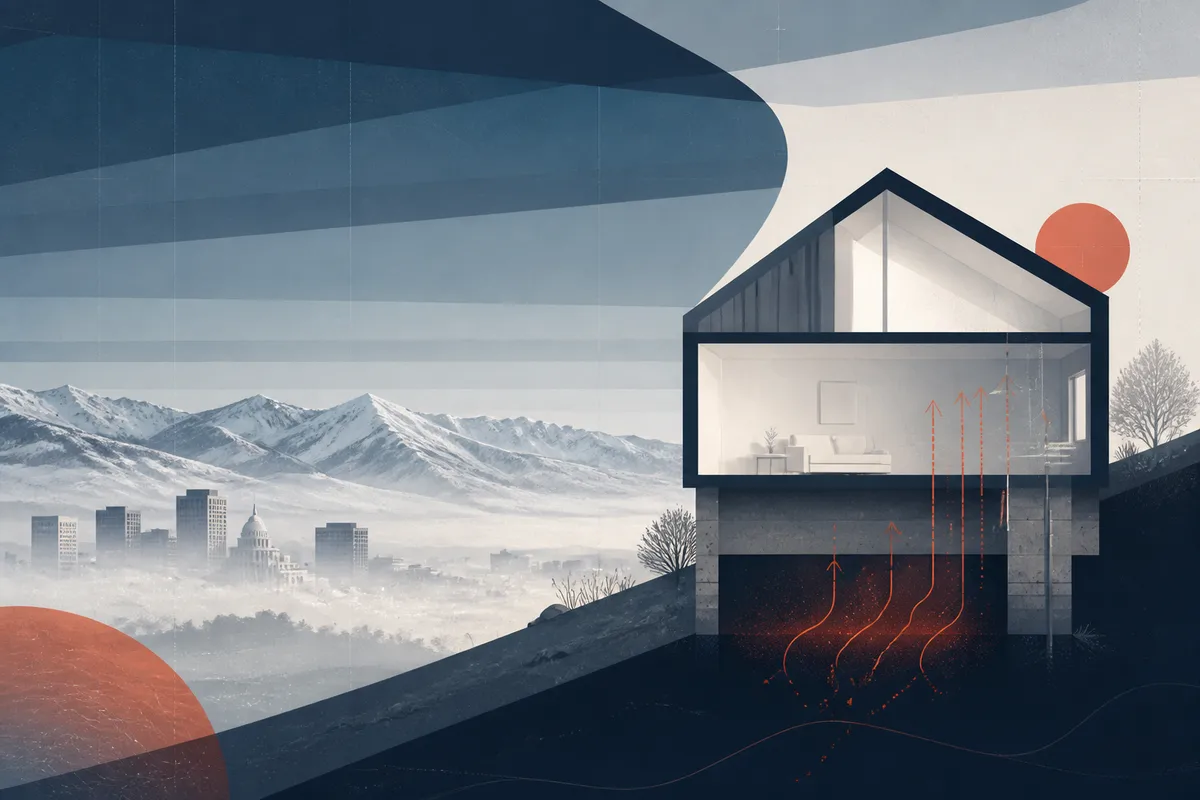
The stack effect occurs when warm air rises and escapes through the upper levels of a home, creating a low-pressure zone at the bottom. This vacuum effect actively sucks radon gas through foundation cracks, sump pits, and utility penetrations. During the coldest months, this pull is at its peak, often resulting in radon levels during winter inversion that are significantly higher than those measured in spring or fall.
2Monitor During Peak Inversion Cycles
Relying on a single summer test result can lead to a false sense of security. Because indoor air quality degrades when the valley's air is stagnant, testing during these periods captures the maximum exposure risk. If a home tests near the action level in the summer, it will likely exceed it during a January inversion.
3Evaluate Foundation Entry Points
Radon enters because of pressure differentials, but it needs a physical pathway. Inspecting the basement or crawl space for exposed earth, unsealed sump pumps, or cracks in the slab is the first step in physical mitigation. Sealing these areas reduces the available pathways for soil gas, though it rarely solves a high-radon issue entirely without active depressurization.
4Adjust Ventilation Strategy Carefully
While it is tempting to "air out" a house, opening windows during a Salt Lake City inversion can introduce high levels of outdoor particulate matter. A more effective strategy involves mechanical solutions that manage pressure without sacrificing heat or inviting in exterior smog. Professional radon testing can determine if your home's natural air exchange rate is sufficient or if the stack effect is overpowering your current ventilation.
The Impact of Atmospheric Capping
A thermal inversion occurs when warm air overlaps a layer of cooler air near the ground. In the Salt Lake Valley, the surrounding mountains act as a bowl, trapping the cold air and everything in it. This atmospheric "cap" increases the concentration of pollutants at ground level.
According to the Utah Department of Environmental Quality, radon is the leading cause of lung cancer among non-smokers, and the levels inside a home can fluctuate daily or even hourly. When an inversion stays in place for several days, the sustained high atmospheric pressure can contribute to a steady buildup of radon that has nowhere to go but up through your floorboards.
How Radon Services Salt Lake City helps
Addressing radon issues during the winter involves a systematic evaluation of the building envelope and the soil beneath it. A standard scope of work typically begins with a diagnostic test using calibrated equipment to establish a baseline during stagnant air conditions. If high levels are detected, the standard industry approach involves installing a sub-slab depressurization system. This creates a permanent low-pressure zone beneath the foundation, venting the gas safely above the roofline before it can enter the living space. Property owners should have their square footage and foundation type ready when seeking a consultation. For more information on localized risks, residents can visit the Salt Lake City Service Area page.
Frequently asked questions
Does a winter test reflect my year-round radon average?
No, a winter test typically represents the higher end of your home's radon fluctuations. Because the stack effect is strongest when it is cold outside, winter results are often higher than the annual average. However, since we spend more time indoors during the winter with windows closed, this "worst-case" data is a vital metric for health safety.
Should I wait for the inversion to clear before testing?
It is actually better to test during the inversion if you want to understand your maximum exposure levels. Testing when the air is stagnant provides a clear picture of how your home performs under pressure. If the levels are safe during an inversion, they are likely safe throughout the rest of the year.
Can I just use an air purifier to remove radon?
No, standard HEPA or carbon air purifiers are not designed to remove radon gas, which is chemically inert. While some specialized filters can capture the "decay products" of radon, they do not address the source of the gas. The only proven way to reduce radon is to prevent it from entering the home or to vent it out through a dedicated mitigation system.
Why is my basement radon higher than the upstairs?
Radon is nearly ten times heavier than air, so it tends to settle in the lowest points of a structure. Additionally, the basement is in direct contact with the soil where the gas originates. Even if you do not spend much time in your basement, the stack effect will eventually pull that gas into the upper living areas.
Does snow cover on the ground affect radon levels?
Yes, heavy snow or ice can act as a temporary seal on the ground around your home. This forces the radon gas, which is constantly being produced by decaying uranium in the soil, to find an alternative escape route. Often, the easiest path is through the porous concrete or cracks in your home's foundation.
What should I do if my winter test comes back high?
If a short-term winter test shows levels above the EPA action level, the next step is typically to perform a long-term test or proceed with a professional inspection. A mitigation professional can evaluate your home’s specific construction and recommend a system to redirect the gas. For immediate assistance or to schedule a test in Salt Lake County, you can reach out at (385) 541-6540.
What happens when you get in touch: you describe the situation, we ask the few questions that actually change the answer, and you get a clear scope and next step — no obligation.